Fitness app quiz funnels: what 22 paywalls show
Fitness coaching apps are among the most active subscription advertisers on Meta, and almost none of them sell on the landing page. We followed their ads to the quiz, answered every screen like a new visitor and stopped at the paywall. Here is how these funnels are built and what they charge.
Data as of · NextAngle research
The angle is the product
The apps sell the same thing — a workout plan on the phone — but no ad says "workout app". Each funnel is built around one narrow, concrete promise, and the first screen repeats it in large letters: the plan has a name before you know the brand.
- Low-impact for older visitors: chair tai chi (two different apps), wall pilates, lymphatic walking.
- Life stages: a postpartum fitness and yoga plan that asks about the birth and diastasis recti.
- Identity: shadow boxing "for men", K-pop dance workouts.
- Body-part programs: kegel training for men and for women.
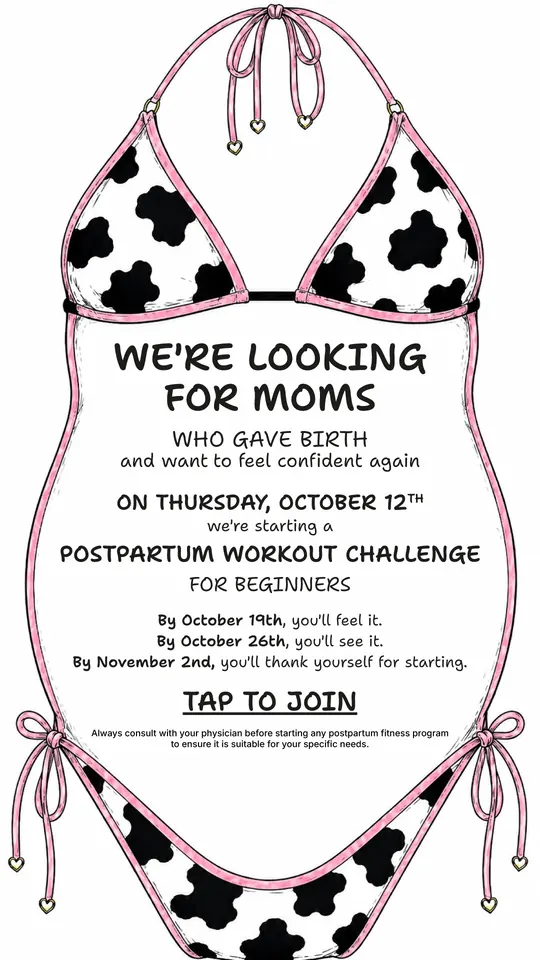
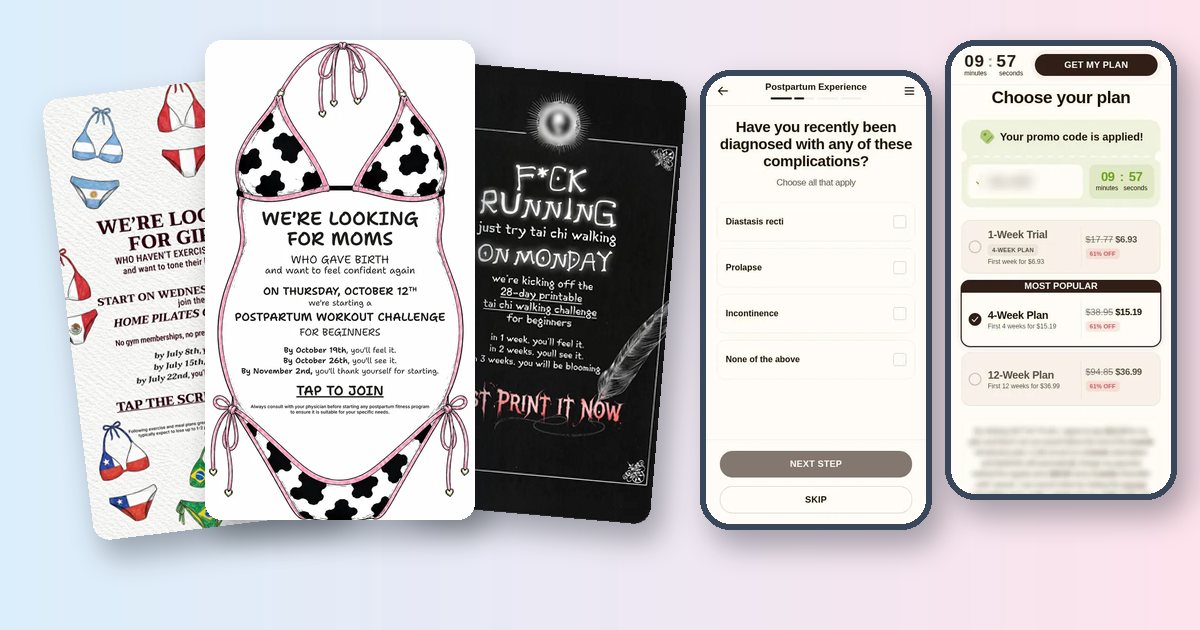
New moms: gentle recovery workouts, a plan by a certified coach.
Why it works: the same app as the quiz below; the dates promise a result by a day the reader can picture.
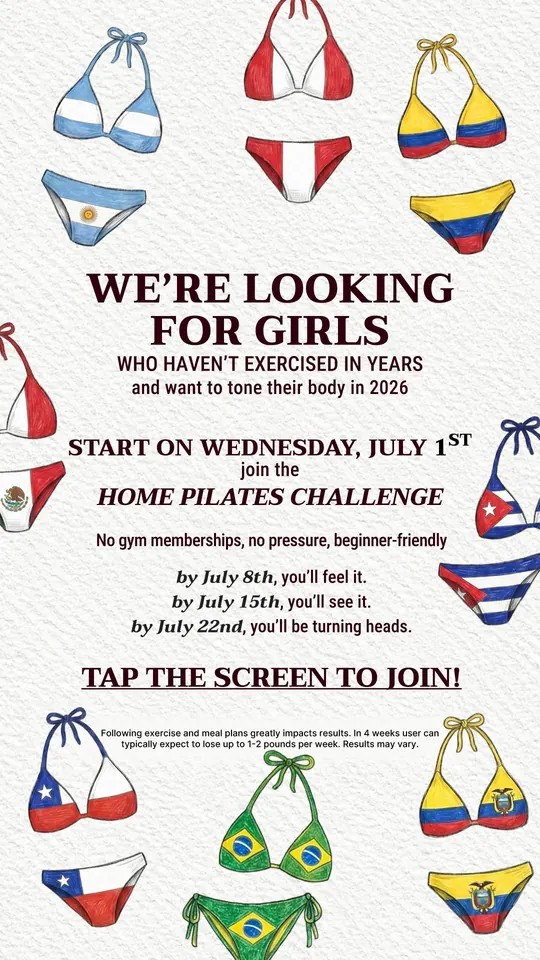
Reformer classes are expensive and fill up fast; this is the studio burn at home.
Why it works: the same "We're looking for…" poster for another audience — still running after four months.
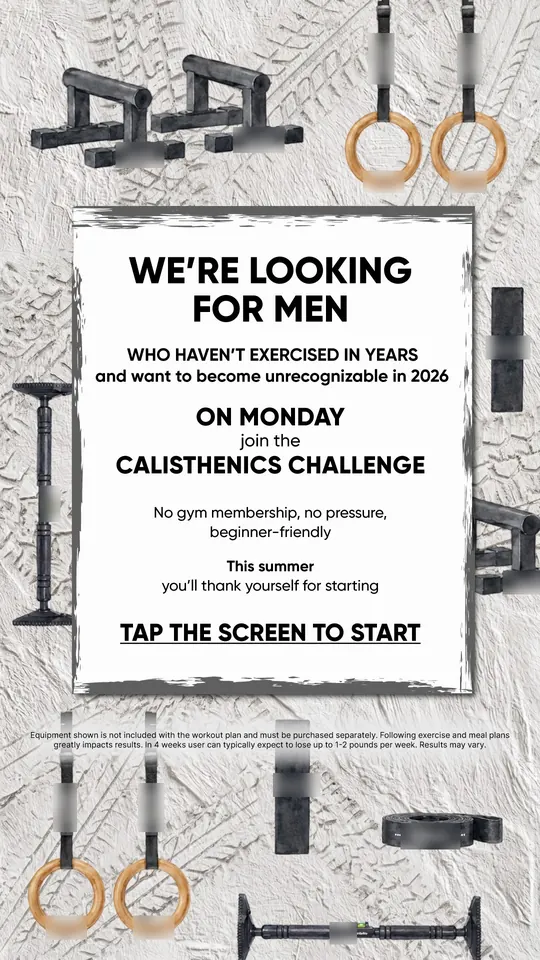
No gym needed: a plan that shapes shoulders, core and arms.
Why it works: the template a third time, now for men; the equipment around it shows the workout without a person.

Gentle tai chi walking, a few minutes a day, no gym, no jumping.
Why it works: a provocative first line and a "printable" challenge: it looks like a free download, the quiz comes after the click.
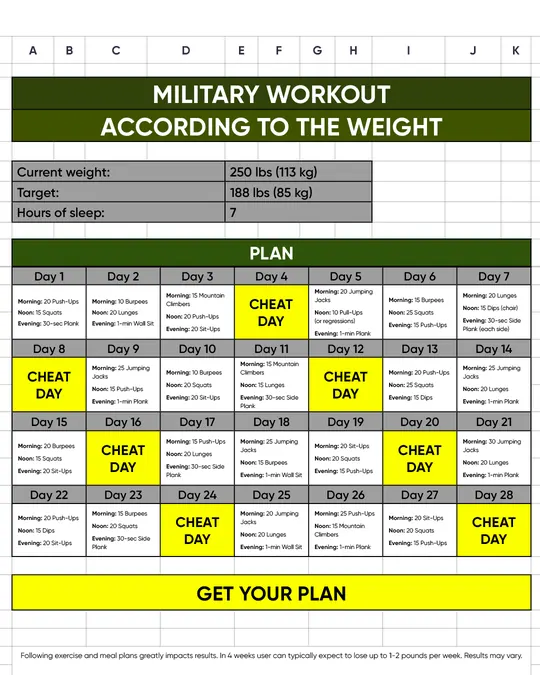
Short workouts, a clear plan: 6–8 minutes, three times a week.
Why it works: the creative is the plan itself — a spreadsheet with the reader's weight and cheat days.
The quiz is long — on purpose
The median funnel took 43 screens to reach the paywall; the shortest 23, the longest 59. That is not friction the advertisers failed to remove: every answer is reused later on the plan screen ("your plan to reach 145 lbs"), and a long quiz filters out visitors who would not pay.
Several apps run the same quiz in many languages; each language version is counted as its own funnel.
Anatomy of one funnel
A postpartum yoga plan shows the usual rhythm. Questions alternate with info screens that answer back ("We feel you, mama!", "Developed by a certified women's health professional"), so the quiz feels like a conversation rather than a form. Diet, water, sleep and cravings come late, when the visitor is already invested. The email is asked on screen 29 of 32 — after the last question and right before the result — and the paywall follows with a countdown timer.
Eight of those screens
As our walk saw them, on a phone-sized screen. The progress bar comes and goes: the info screens show none, so the visitor never knows how many screens are left.
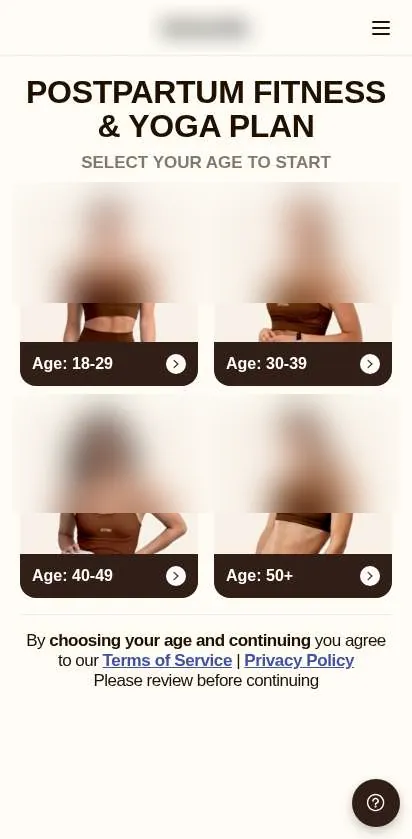
1 / 32. The promise as the title, and one easy tap.

3 / 32. Authority before the personal questions.
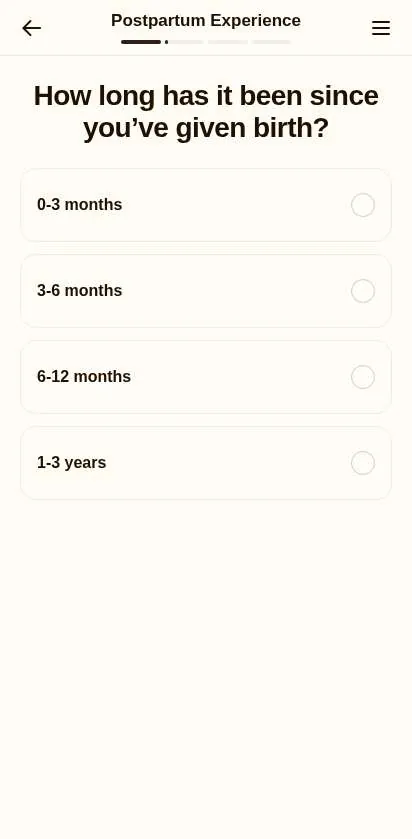
8 / 32. Segments the plan — and the ads that follow.
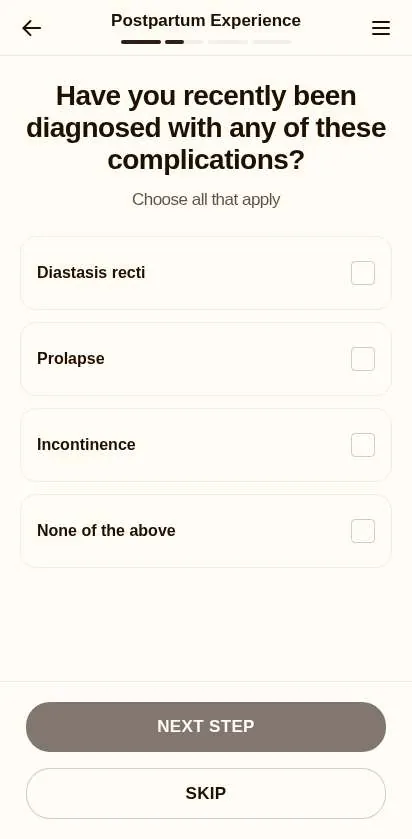
12 / 32. A sensitive question, answered back right away.
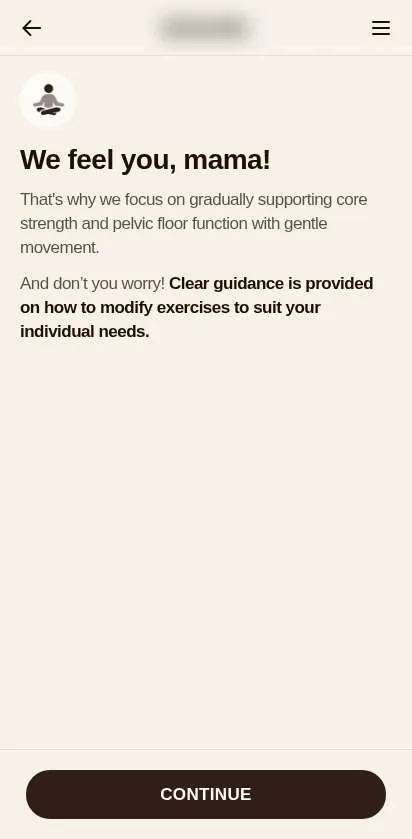
13 / 32. The answer-back screen.
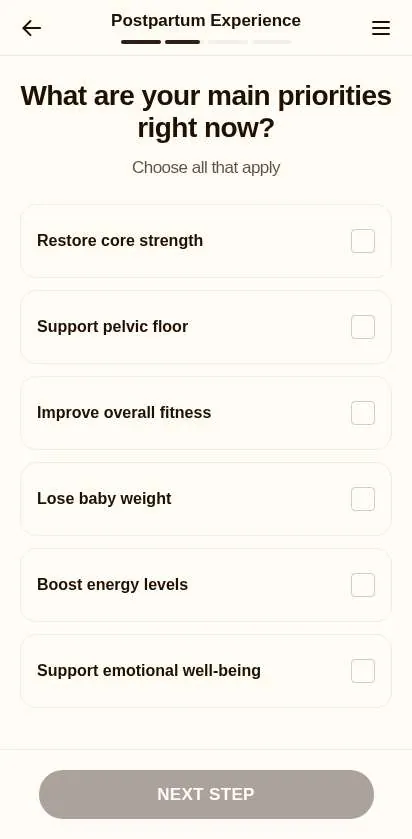
16 / 32. The goal the plan will be named after.
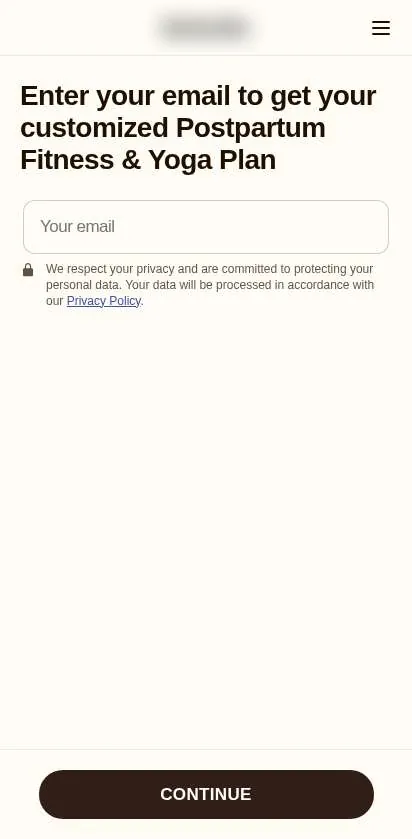
29 / 32. Asked after the last question, before the result.
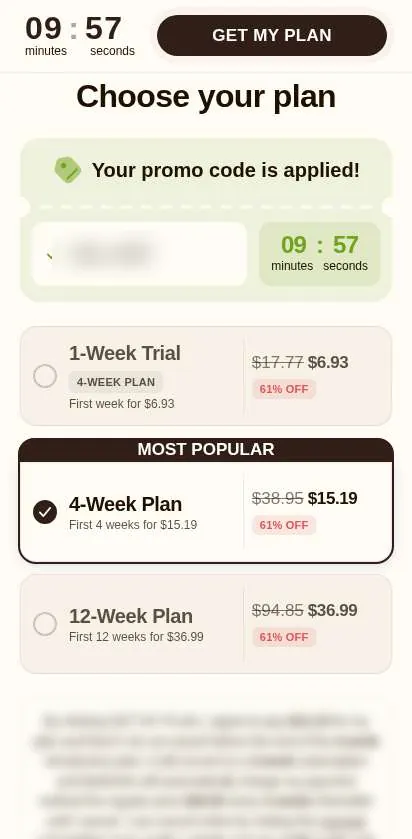
32 / 32. A countdown, a "promo code", crossed-out prices, the middle plan pre-selected.
The first payment is small; the anchor is not
Paywalls lead with an intro price. The median first payment was about $7; eight funnels of 22 started at about $1 or less (one with a free trial), and the most expensive start was under $24. The full price shows next to it, crossed out, and does the selling: the intro price is 61% "off" on every plan of the funnel below.
Three plans, one of them to be picked
Most paywalls (16 of 22) show three plans, typically 1 week, 4 weeks and 12 weeks. The middle or the longest is marked "most popular", and some funnels pre-select a different one than the badge — a 4-week plan at $1 pre-selected next to a 12-week plan marked most popular. Prices per day ($0.88 a day for 12 weeks) make the long plan look cheapest.
What to take from it
- Name the plan after the angle, not after the app: the first screen is the headline.
- Answer back between questions; it keeps a 40-screen quiz moving.
- Ask for the email at the end, when the result is one click away.
- Test the intro price against the anchor, not against the competitors' intro prices — they all start low.
How we collected this
NextAngle visits the landing pages of the ads it collects from the Meta Ad Library, recognizes quizzes and walks them to the paywall from a clean browser, with a test identity, and never pays. This page uses the fitness coaching funnels walked between October 16 and 29, 2026 whose paywall plans we could read: 22 quizzes of 10 apps. A screen where the visitor picks an answer and then taps Continue counts once. It is a sample of what we visited, not the whole market.
Questions
How much does a fitness app subscription cost after the intro price?
In this sample the first payment was about $7 on the median, and the full price shown crossed out next to it is roughly two and a half times higher: $6.93 then $17.77 for a week, $15.19 then $38.95 for four weeks, $36.99 then $94.85 for twelve weeks on one typical paywall. The intro price covers only the first period.
Why are fitness app quizzes so long?
The median quiz took 43 screens. The answers are reused on the plan and paywall screens ("your plan to reach your goal weight"), info screens answer back between questions, and a long quiz filters out visitors who would not pay.
When do fitness app quizzes ask for an email?
Near the end: after the last question and right before the result and the paywall. In the funnel we show screen by screen, the email was asked on screen 29 of 32.
Is the "61% off" on fitness app paywalls a real discount?
It is the difference between the intro price of the first period and the full price the plan renews at. Every plan of the paywall we show carried the same 61% — the discount is part of the price grid, not a sale.
Do fitness apps offer a free trial?
Rarely. One funnel of 22 started with a free trial; eight started at about $1 or less for the first week, and the most expensive start was under $24.
Which ad angles do fitness apps use on Meta?
One narrow promise per funnel: low-impact workouts for older visitors (chair tai chi, wall pilates, lymphatic walking), life stages (postpartum), identity (shadow boxing for men, K-pop dance) and body-part programs such as kegel training.
Read next
Quiz funnel spy
Walk the quiz behind an ad step by step, up to the paywall.
Paywall price tracker
Intro prices, trials and plans of subscription funnels.
Winning Facebook ads
Find the ads that keep running and scale.
See every fitness funnel and its paywall
Then Pro at $99 a month, cancel any time. During the beta we let people in from the waitlist.
Join waitlist