AI course apps: what 20 quiz funnels and paywalls show
Apps that teach people to use ChatGPT, Claude and other AI tools have become a busy subscription niche on Meta. Like fitness apps, they sell through a quiz: the ad leads to a few dozen questions, then to a paywall. We walked 20 of these quizzes to the end, as a new visitor would, and stopped at the paywall.
Data as of · NextAngle research
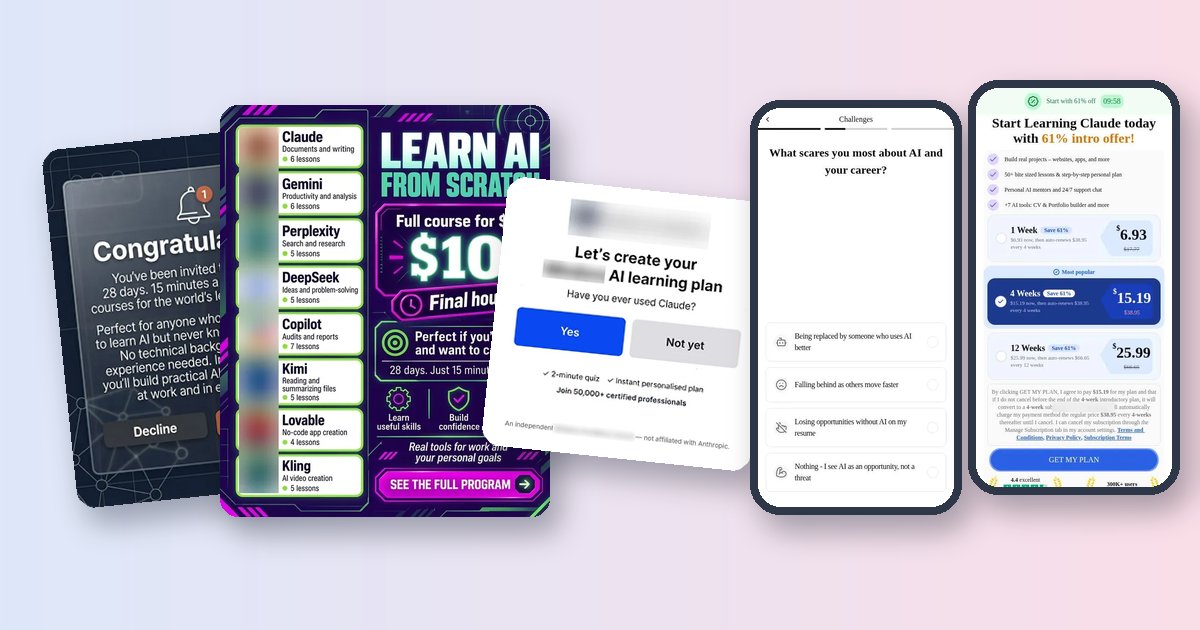
The product is a course; the hook is the fear of falling behind
Every app in the sample sells the same thing: short daily lessons on AI tools, a plan built from the quiz answers, often a certificate at the end. The ads and quizzes differ in what they promise the course will change.
Nine of the 20 quizzes ask, in some form, whether the visitor feels behind or fears being replaced by someone who uses AI. Nine promise a certificate before the paywall. Twelve ask about money, and in six of them earning more, or earning outside a 9-to-5, is the main thread — with questions like "What is your desired annual income?" and answers from $50,000 to $200,000.
- Career anxiety: "What scares you most about AI and your career?", "Do you think people using AI are moving faster than you?"
- One tool by name: quizzes and plans named after Claude or Claude Code, opening with "Have you ever used Claude?" Some carry a line that the course is not affiliated with Anthropic.
- One job by name: an "AI-powered accountant", AI for Word, Excel and PowerPoint.
- A way out: remote work, side income, "move beyond the 9-to-5".
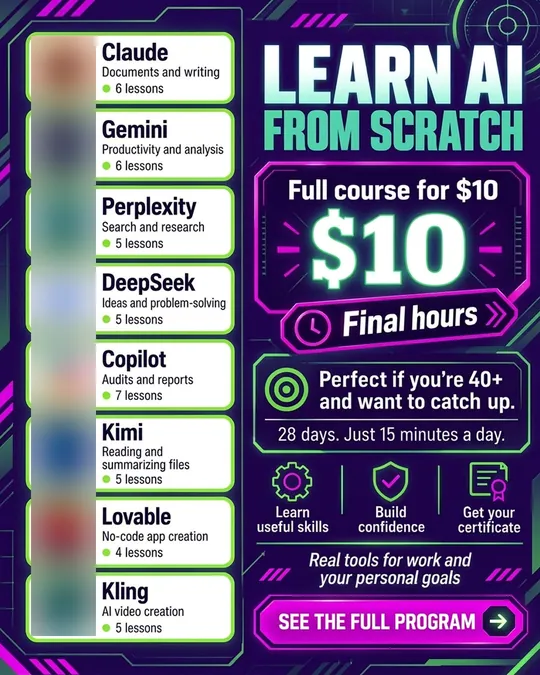
Learn AI from scratch: eight tools with lessons for each, the full course for $10, for people 40+ who want to catch up.
Why it works: a menu of tools the reader has heard of, an age call-out and the price right on the picture.
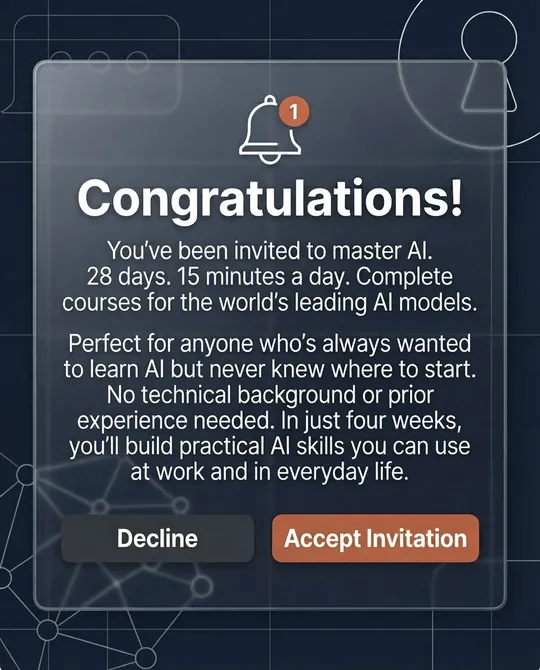
Congratulations, you've been invited to master AI: 28 days, 15 minutes a day, no background needed.
Why it works: it looks like a notification with Accept and Decline buttons — and it ran for seven weeks.

Become an AI-powered accountant: a certification program in three modules.
Why it works: one profession by name turns a general course into a career upgrade; the copy asks "what happens if you don't adapt?"
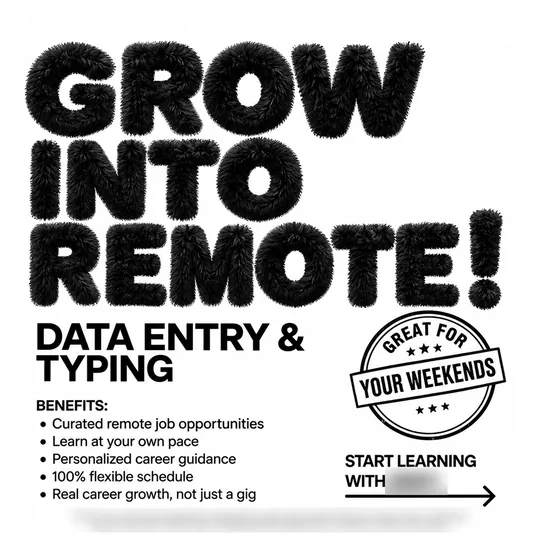
Grow into remote work: data entry and typing, learn at your own pace, great for weekends.
Why it works: it sells the way out of the 9-to-5; the quiz behind it asks for the reader's desired annual income.

Let's create your AI learning plan. Have you ever used Claude? Yes / Not yet.
Why it works: the creative is the first screen of the quiz, so the click already feels like the first answer; the copy offers a certificate for $1.
One quiz, three brands
Three apps with different names, domains and logos run the same quiz: the same screens in the same order, the same questions and answers, the same paywall with the same prices to the cent. Two more apps share a second quiz the same way. The brand on the header is the only thing that changes.
The prices themselves travel further: the first two plans of this paywall — $6.93 then $17.77 for a week, $15.19 then $38.95 for four weeks, "Save 61%" — are exactly the plans of the postpartum fitness funnel in our previous teardown. Funnel templates and price grids are shared across niches, not invented for each app.
| App | Screens to the paywall | Email on screen | Plans: first payment |
|---|---|---|---|
| App A | 36 | 34 | $6.93 · $15.19 · $25.99 |
| App B | 36 | 34 | $6.93 · $15.19 · $25.99 |
| App C | 35 | 33 | $6.93 · $15.19 · $25.99 |
First question in all three: “Have you ever used Claude?”
Shorter than fitness quizzes, still long
The median AI course quiz took 32 to 33 screens to reach the paywall — shorter than the 43 of the fitness apps, but nowhere near a sign-up form. The shortest took 13 screens, the longest 51. The quizzes collect what the plan will be named after: the job, the tools already tried, the minutes a day the visitor can spare.
17 of the 20 ask for an email before the paywall, five screens before it on the median. Three funnels of one app skip the email and go straight from the last question to the plans.
Anatomy of one funnel
A "learn Claude" plan shows the rhythm. The first answer is a yes or no. A profile block (goal, work status, age) ends with "Did we get everything right?" — a summary of the answers so far that makes the quiz feel attentive. Then come the fears, a self-rating on writing with AI, the dream of building an app without code, the learning style, the certificate. Three last yes-or-no questions pop up over a "building your plan" progress bar. The email is asked on screen 34 of 37, after the profile is shown back.
Eight of those screens
As our walk saw them, on a phone-sized screen. One of the reviews shown under the pop-ups is about an unexpected add-on charge at checkout.

1 / 37. A yes-or-no question on the first screen, the tool in the headline.
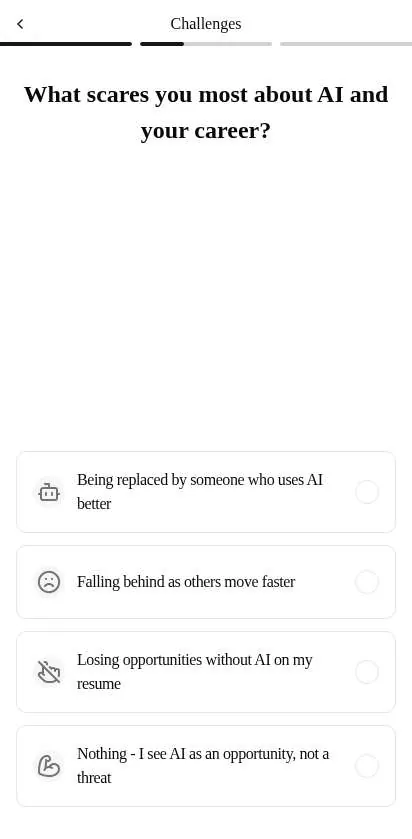
11 / 37. Being replaced, falling behind, losing opportunities — or "nothing".
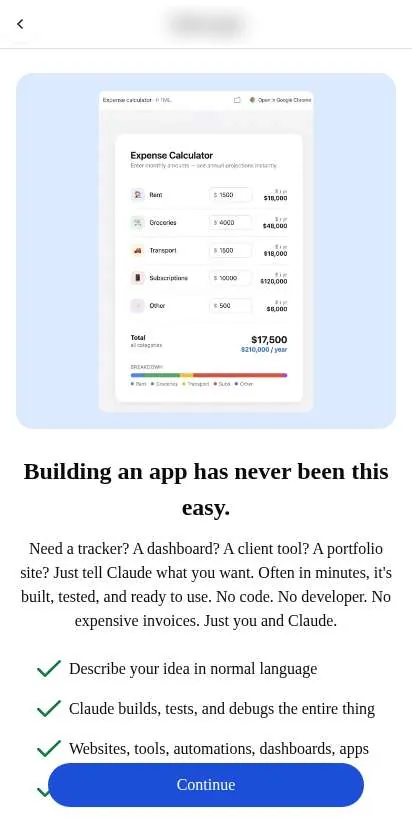
20 / 37. An info screen sells a second promise: build apps without code.
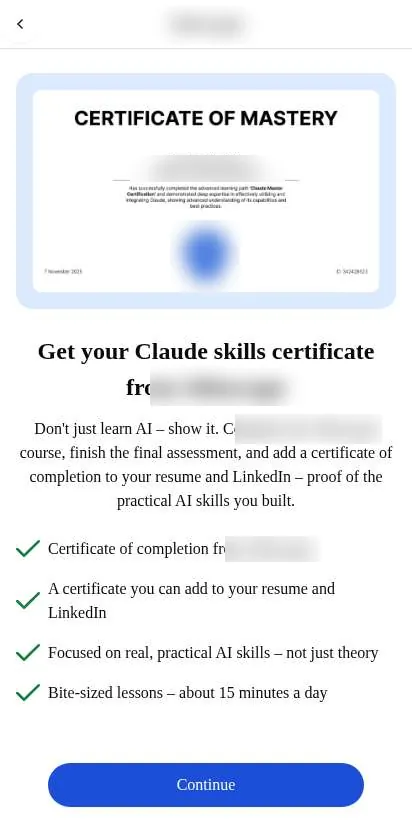
28 / 37. The certificate gets a screen of its own, for the résumé and LinkedIn.
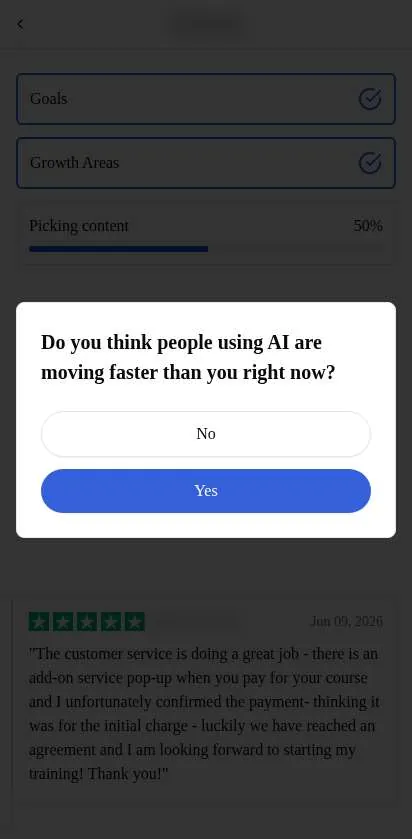
32 / 37. Yes-or-no pop-ups over a "building your plan" progress bar and reviews.
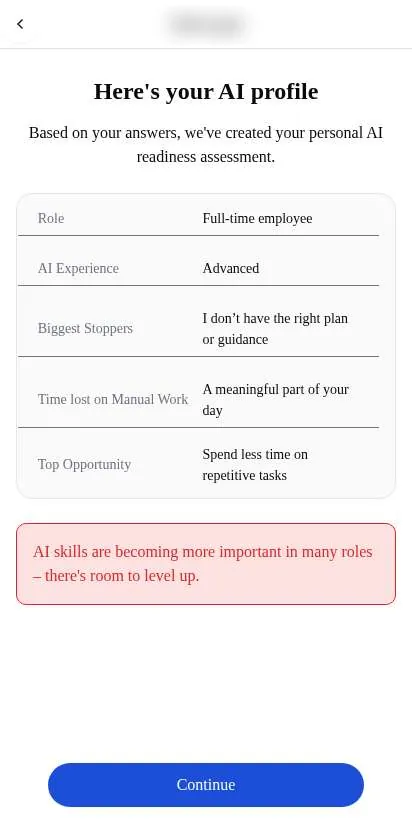
33 / 37. The answers come back as a profile with a warning in red.

34 / 37. The email, three screens before the paywall.
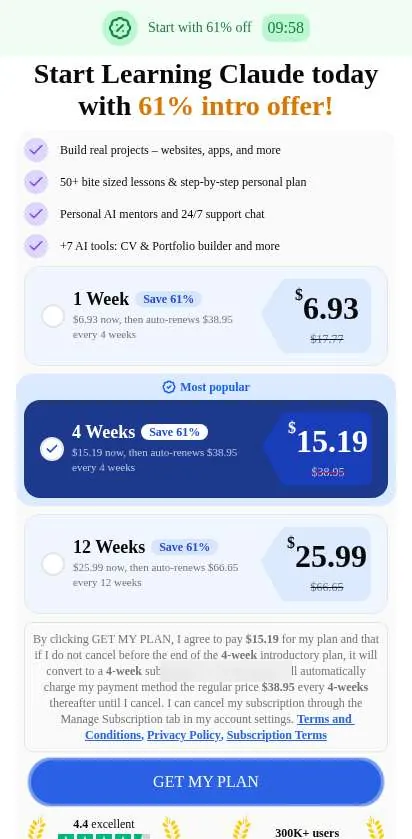
37 / 37. A 10-minute timer, "Save 61%" on every plan, the middle one pre-selected.
$1, $6.93 or $10 to start
Paywalls lead with an intro price. Four funnels start at $1 (three of them as a 3- or 7-day trial), six at exactly $6.93, the most common price in the sample, and the rest between $9.49 and $22. The median first payment was about $8.
Then about $39 every four weeks
The intro prices differ; what comes after them mostly does not. In 12 of the 18 funnels that show it, four weeks (or a month) cost between $38.95 and $39.99 after the intro. Three funnels charge $29.99 a month after a $1 start; one asks $85 for four weeks.
Read the fine print of the cheapest plan: on the paywall shown above, the "1 week" plan at $6.93 renews at $38.95 every four weeks, not at the $17.77 crossed out next to it.
Three plans, the middle one picked for you
Half of the paywalls show three plans: 1, 4 and 12 weeks, or 1, 3 and 12 months. On the one below, the 4-week plan is marked "most popular" and pre-selected, every plan says "Save 61%", and a 10-minute timer runs above them.
What to take from it
- Name one tool or one job in the ad and on the first screen; "learn AI" alone is the crowded middle.
- The fear of falling behind sells, but every funnel uses it — the angle that differs is what the course leads to: a certificate, an app, a raise, a remote job.
- Expect competitors to copy a working quiz wholesale; watch for the same quiz under new names.
- Compare renewal prices, not intro prices: the intros range from $1 to $22, the renewals sit around $39.
How we collected this
NextAngle visits the landing pages of the ads it collects from the Meta Ad Library, recognizes quizzes and walks them to the paywall from a clean browser, with a test identity, and never pays. This page uses the funnels of apps that teach AI tools, walked between October 17 and November 11, 2026, for ads seen in the US, whose paywall plans we could read: 20 quizzes of 15 apps, one in Spanish. Two other funnels of the same niche — a bootcamp sold at $390 and a one-page sales site — are left out as different models. A screen where the visitor picks an answer and then taps Continue counts once. It is a sample of what we visited, not the whole market.
Questions
How much do AI course apps cost?
The first payment ranged from $1 to $22 in this sample, about $8 on the median; six funnels started at exactly $6.93. After the intro, four weeks or a month cost between $38.95 and $39.99 in 12 of the 18 funnels that show it; three funnels charge $29.99 a month after a $1 start.
What does the cheapest AI course plan renew at?
Check the fine print, not the crossed-out price. On the "learn Claude" paywall shared by three apps, the 1-week plan costs $6.93 and then renews at $38.95 every four weeks, while the price crossed out next to it is $17.77.
Do AI course apps give a certificate?
Nine of the 20 quizzes promise one before the paywall: a certificate of completion from the app, presented as something to add to a résumé or LinkedIn. The quizzes we walked present it as the app's own certificate.
Are apps that teach Claude or ChatGPT made by Anthropic or OpenAI?
No. They are independent course apps; some of them say on the first screen or in the ad that they are not affiliated with Anthropic.
Why do different AI course apps have the same quiz?
Funnels are built from templates. In this sample three apps with different names ran the same quiz screen by screen with the same prices, and two more apps shared a second quiz. Only the brand on the header changed.
How long is an AI course app quiz?
32 to 33 screens on the median, from 13 to 51. 17 of the 20 funnels ask for an email, about five screens before the paywall.
Which ad angles do AI course apps use?
The fear of falling behind or being replaced, one tool by name (Claude, Claude Code), one job by name (an AI-powered accountant), a certificate, and a way out of the 9-to-5 through remote work or side income.
Read next
Fitness app quiz funnels
22 paywalls of fitness coaching apps: screens, prices and angles.
Quiz funnel spy
Walk the quiz behind an ad step by step, up to the paywall.
Paywall price tracker
Intro prices, trials and plans of subscription funnels.
See every AI course funnel and its paywall
Then Pro at $99 a month, cancel any time. During the beta we let people in from the waitlist.
Join waitlist